Another product under a copied label
A low-grade oil or honey is bottled with a colour copy of a well-known brand's label. Side by side on the shelf, the two look the same.


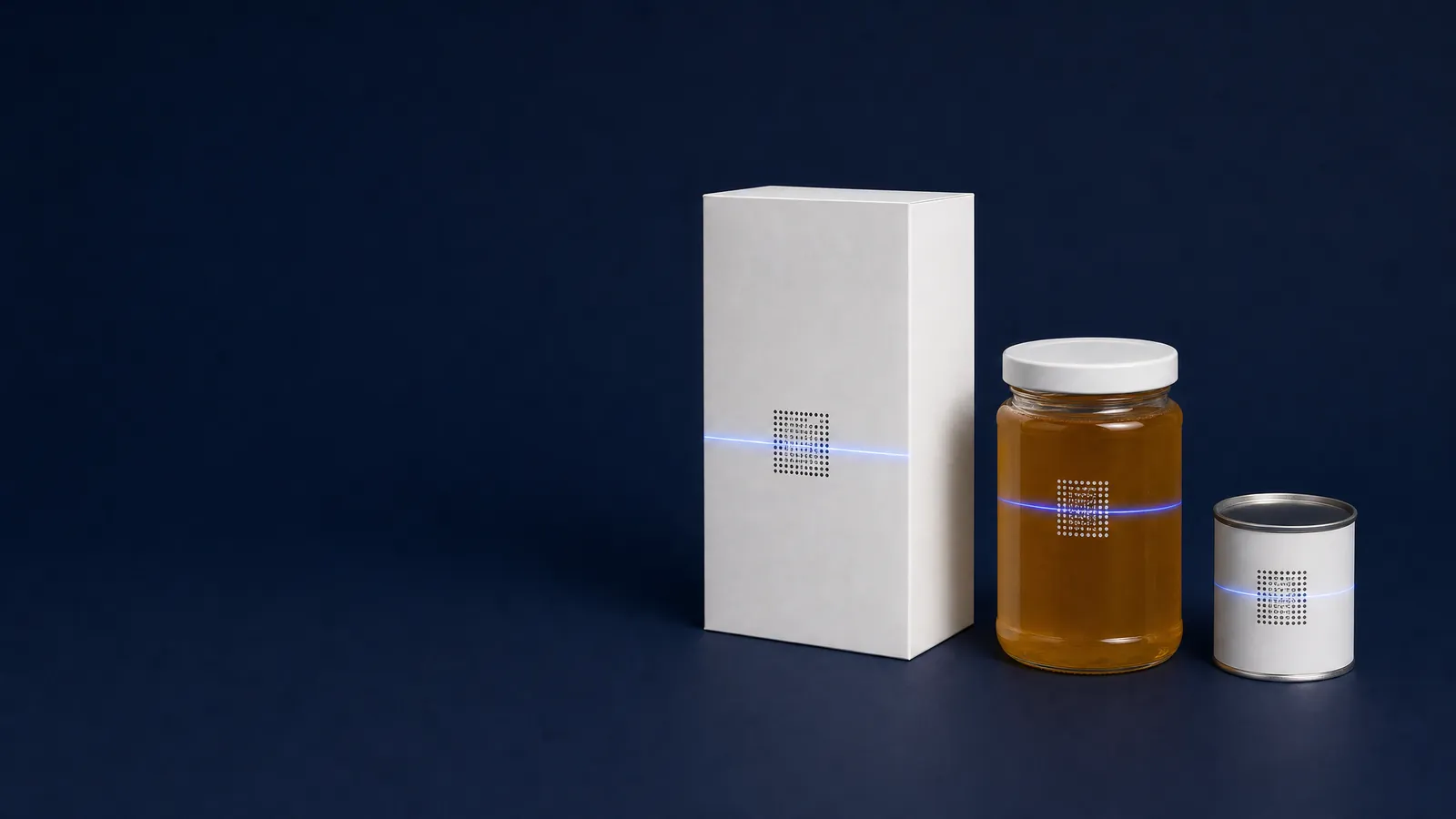
Fake olive oil, honey or coffee is often sold under a well-known brand's label. The Grafex signature goes into the existing label and is read with a phone in front of the shelf.
Implementation
Grafex works a signature that cannot be seen by eye into a food product's label, carton or printed packaging. Mandatory label information, the nutrition table and the barcode stay where they are, and the pack is printed on the same line. If a counterfeiter copies the brand's label onto another product and the copy does not carry the signature, it does not get a genuine result when scanned. Store managers, wholesalers and shoppers run the same check in the mobile app, and the scans show which regions suspicious results come from.
Most food fraud is in the contents: other oils blended into olive oil, or syrup added to honey, and these are found in the laboratory. There is also fraud on the pack. Another producer's product reaches supermarkets, street markets or online sellers under a copied label from a well-known brand, and the shopper's complaint goes to the brand named on the label. In that second case Grafex shows at the shelf whether the label is the brand's own print.
Request a meeting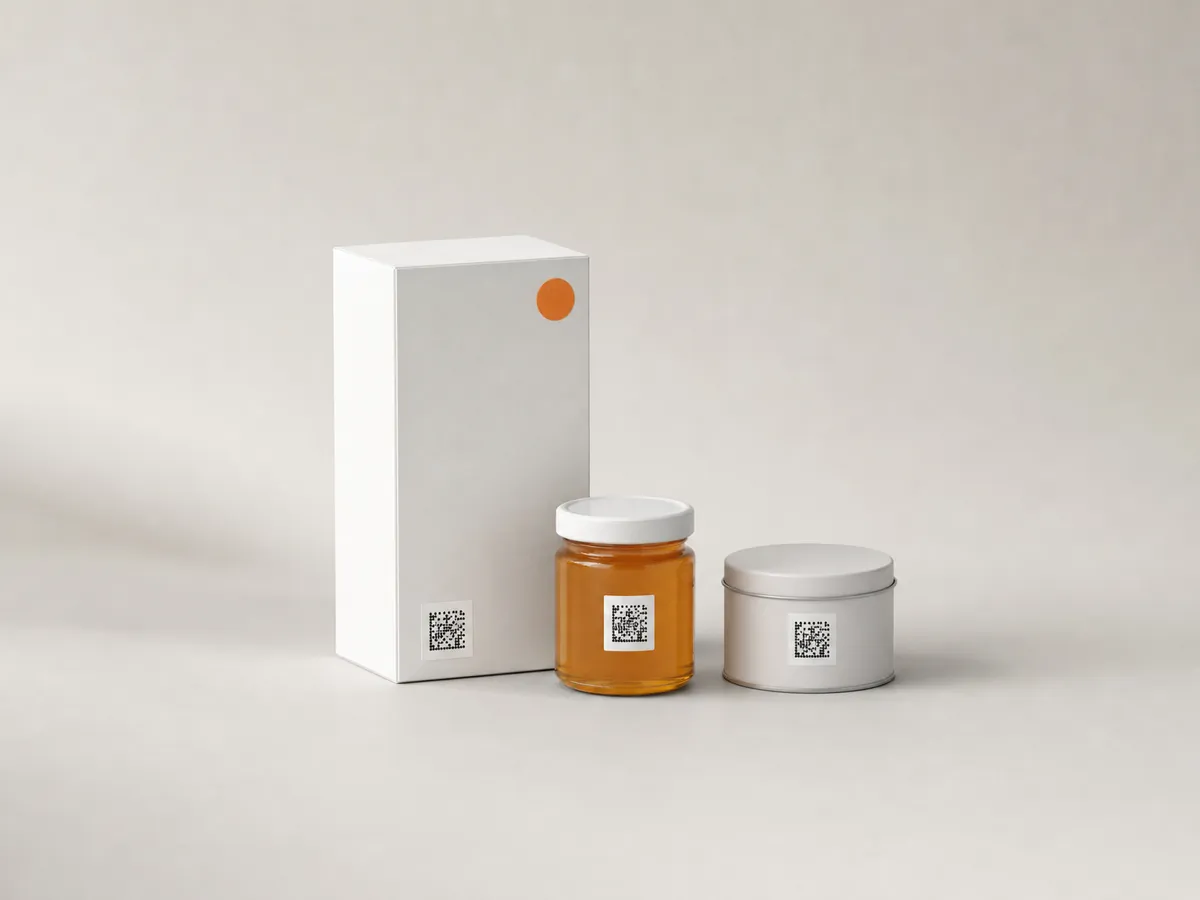
Data
Fats and oils cases flagged for suspected fraud in the EU Alert and Cooperation Network in 2025
Source: European Commission, Alert and Cooperation Network 2025 Annual ReportHoney and royal jelly cases flagged for suspected fraud in the same year
Source: European Commission, Alert and Cooperation Network 2025 Annual ReportRisks
A low-grade oil or honey is bottled with a colour copy of a well-known brand's label. Side by side on the shelf, the two look the same.
At street markets, roadside stalls or social media sellers there is no store employee checking packs. The shopper decides by the label.
When copy-labelled products are slipped in among genuine cases, the wholesaler and the store receive the delivery by barcode. The barcode reads on a copied label too.
Olive oil, hazelnut spread or Turkish delight sold abroad can be imitated with copy labels printed locally in the destination market. Distributors and importers check incoming goods with the same app.
Example scenario
Label, carton and cap print files and a sample pack are reviewed. The signature goes into the design without touching mandatory information or the barcode.
The label printer or packaging supplier prints the signed file on its usual line. The filling and packing line does not change.
A regional wholesaler or store manager scans products from an incoming case. Results that do not come back genuine are recorded with location and sent to the brand's quality team.
A shopper scans a suspect bottle with a phone. The complaint reaches the brand together with the scan record, and the brand can see where the copy-labelled product was sold.
Regulation
Published in the Official Gazette on 26 January 2017, the regulation requires mandatory information to be clearly legible on the pack, with characters of at least 1.2 mm x-height; for packs whose largest surface is under 80 cm² the minimum is 0.9 mm. The Grafex signature goes into the design without changing the position, size or legibility of that information.
Under Law No. 5996 and the regulation on official food and feed controls, when a laboratory result confirms imitation or adulteration, the producer, brand and batch number can be published on the Ministry's website. Grafex scans help separate products sold under the brand's label that the brand did not make; the analysis and publication remain the Ministry's responsibility.
This section is for information only; official sources prevail for current obligations.
FAQ
The oil's composition cannot be read from the label and needs laboratory analysis. If the label carries a Grafex signature, a phone scan shows whether the label is the brand's own print, and a label without the signature does not come out genuine on that scan.
No. The ingredients list, nutrition table, best-before date and barcode stay in the same place and the same size. The signature sits inside the design where the eye cannot see it.
Paper and plastic labels, cartons and printed packaging are assessed according to the printing method and material. Suitability is decided during the needs analysis using a sample pack.
Every scan is recorded with date and location. The dashboard reports which branches or regions produced suspicious results, and records can be passed to the brand's own systems through the API.
Grafex verifies whether the packaging is genuine; it does not record which warehouse or store a batch went to. Recalls rely on the producer's own traceability records.
Other industries
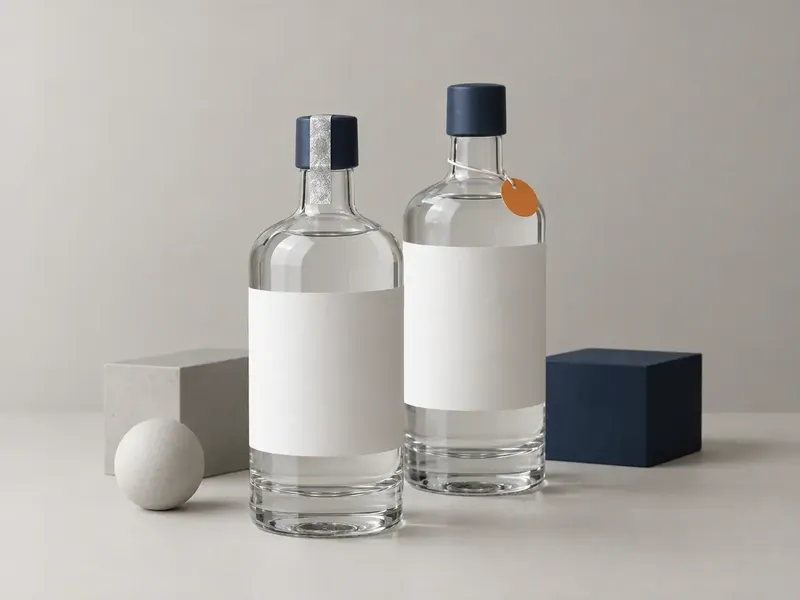 Alcoholic beveragesAn invisible signature on bottle labels and gift boxes; bars, shops and drinkers scan the bottle by phone.
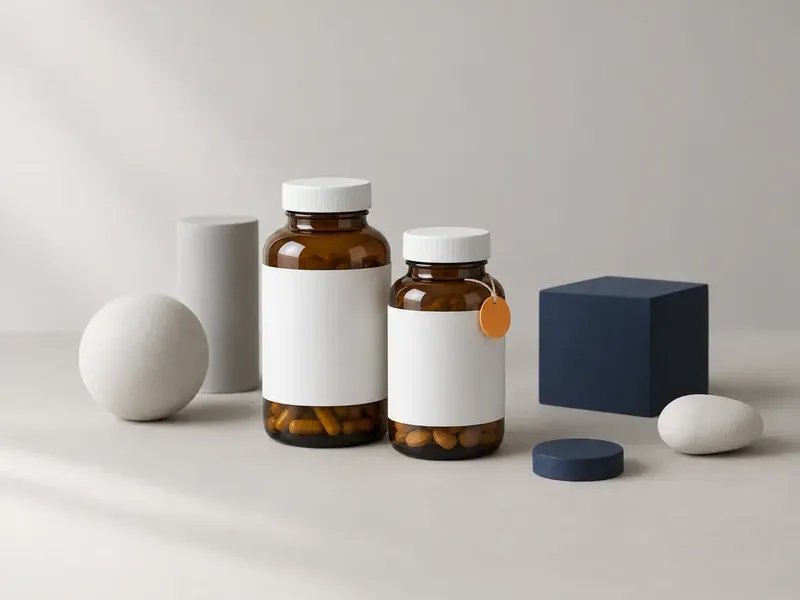 Food supplementsAn invisible signature on supplement cartons and bottle labels; pharmacists and buyers verify by phone.
 Industrial equipmentAn invisible signature on consumables, filter and spare part packs; stores and maintenance teams verify.
Meeting request
The first meeting reviews your product, sales channels and the risks you face, and recommends a suitable method.
Request a meeting