The main security features used on packaging are holograms and other optical elements, security inks, tamper-evident features and invisible signatures embedded in the design. From a packaging team's point of view the differences come down to three questions: how much they change the design, which print step and which supplier they add, and who can check the product and with what tool. A tamper-evident feature shows whether the pack has been opened; the others show whether the packaging itself is original.
The EUIPO anti-counterfeiting technology guide defines features noticed without a tool or training as overt, and those that can be seen with an extra tool or training as covert. Each heading below notes which class a feature belongs to; the main focus is what each one costs in the packaging process.
What do holograms and optical elements add to packaging?
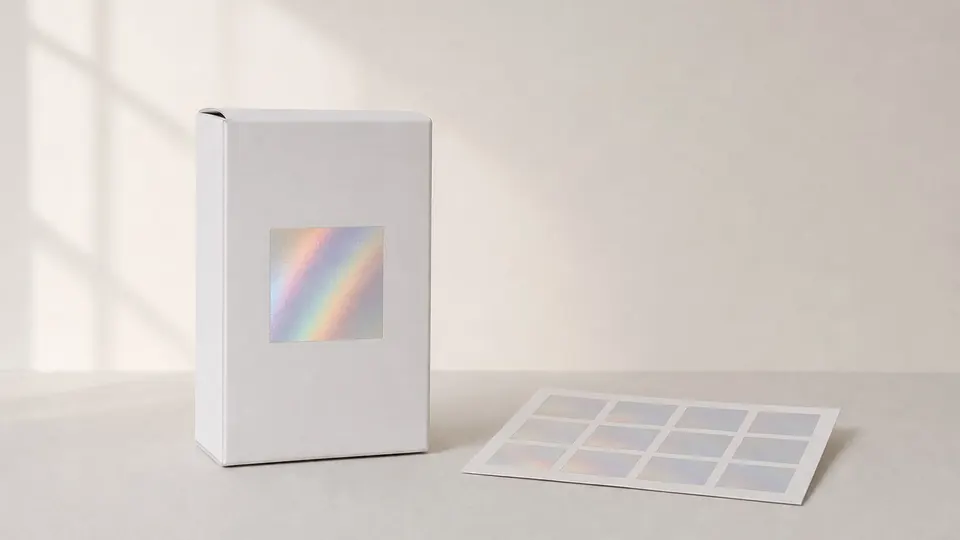
Holograms and similar optical elements are overt features. The artwork has to reserve space for them, they often come from a separate supplier, and they are applied in a separate step as hot foil or a label. Both design approval and the print plan are reopened.
In return, consumers can check the product on the shelf without a tool. That is also the weak point: consumers do not know what the original hologram looks like. A similar-looking optical element gives the same reassurance, and the more widely a feature is used, the easier it becomes to find something like it.
What do security inks change?
Inks that show under ultraviolet light are covert features, while inks that shift colour with the viewing angle are overt; microtext read with a magnifier can be counted in this group too. They may require no visible change to the design, but they add work on the print side: sourcing the special ink, stock and usage control at the printer, colour and density tolerances.
On the checking side, a UV lamp or a magnifier is needed, and the person checking must know what to look for. That is why security inks stay limited to quality teams and field inspectors at most brands; dealers and consumers cannot make this check.
What does tamper evidence prove, and what does it not?
Tamper bands, breakable caps, void labels that leave a mark when removed, and seals show whether a pack has been opened for the first time. They are overt features and one of the few elements consumers can check with confidence.
Where tamper evidence really earns its place is genuine packaging that someone tries to refill. When bottle, cap and label are real, a feature that checks the originality of the packaging returns "valid"; only the tamper-evident feature tells you the pack has been opened. The reverse is also true: a copy printed from scratch comes with its own band and seal. The two checks therefore cannot replace each other.
How does an invisible signature get into the design?
An invisible signature is placed inside the print that is already on the packaging, in a way suited to the print method. Because it cannot be seen it is a covert feature, but unlike classic covert features no special device is needed to read it; a smartphone app is enough. No new area, supplier or application step is added to the design, and the approval file does not change. Its cost is also clear: because it is invisible on the shelf, it does not tell consumers "this product is protected". How it is added to an existing design, how print tolerances are verified, and that cost are covered in protecting your packaging without touching it.
What should a packaging team look at when choosing?
Before comparing technologies, the following questions about the packaging process should be answered:
- Approval cycle: does the feature reopen design approval, regulatory checks and customer communication?
- Supply and printer: when the printer or material supplier changes, how is the feature carried over, and who verifies it?
- Product family: does every pack size and every variant need a separate application?
- Who checks: the quality team, dealers and inspectors, or the end consumer; what tool do they have?
- Recording: is every check stored as a data point, or does the result stay with the person who made it?
ISO 22383:2020 provides guidelines for selecting authentication solutions for material goods and assessing their performance, and can be used to carry these questions into a structured assessment table. At most brands the answers do not lead to a single feature; tamper evidence and an originality element answer different questions and are used together.
Where does Grafex fit in this picture?
The Grafex invisible signature is an element that verifies the originality of the packaging; it does not do the job of tamper evidence. The signature sits inside the existing packaging design, the packaging is printed on the existing line. Because the signature is generated from a brand-specific key, packaging that does not carry it does not get a genuine result at verification. Company teams, dealers and consumers scan the product with the mobile app; every scan is recorded with date and location, and suspicious scans are reported by region and channel. Where forensic analysis is required, an app scan does not replace a laboratory result. The scope is on the solutions page.