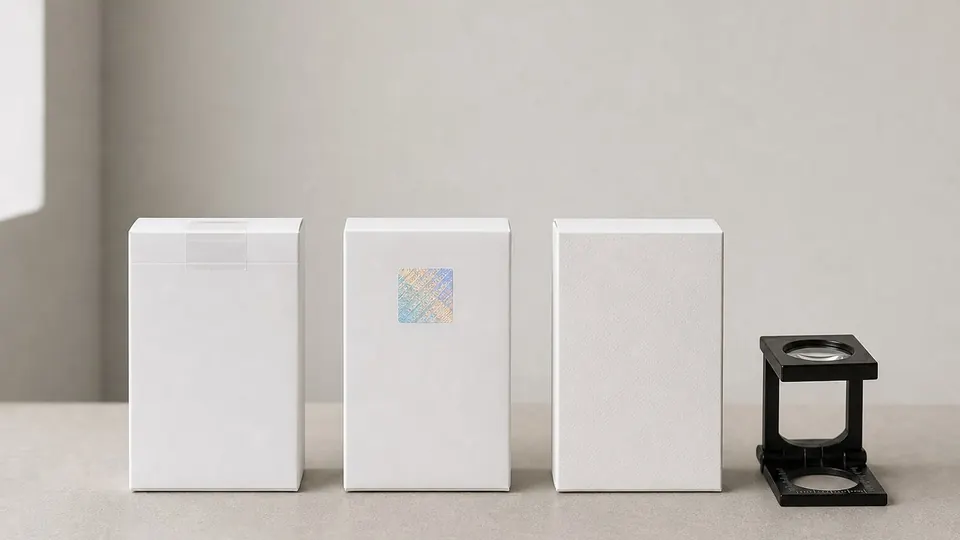
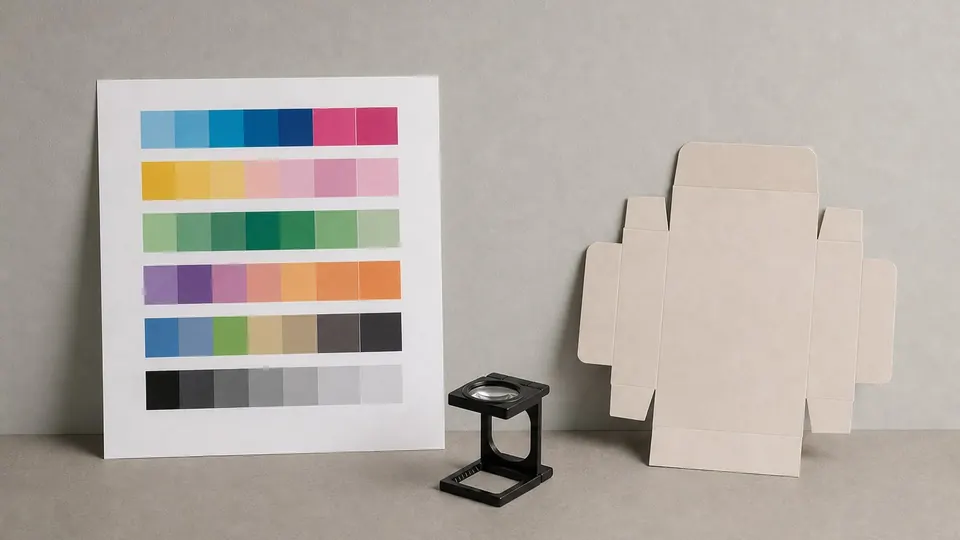
Packaging counterfeiting is the unauthorised copying of a brand's box, label or bottle, or the reuse of genuine packaging for another product. Preventing it is not a matter of picking one security feature. It takes a plan that identifies the routes copies come from, closes gaps in the print supply chain, assigns overt and covert methods to the people who will actually check them, and ties every check in the field to a record. Grafex is a product authentication technology that adds an invisible digital signature to the packaging design and lets anyone verify a product's authenticity with a smartphone; this guide walks through the plan and shows where Grafex fits in it.
Why treat packaging counterfeiting as its own problem?
Fakes are often sold not alongside their packaging but because of it. The 2022 intellectual property crime threat assessment by Europol and the EUIPO makes the point in several ways:
- In 2020, packaging materials were the most frequently seized category of counterfeit articles at the EU's external border.
- Packaging materials, logos and labels are usually shipped separately from the counterfeit goods and combined with them later.
- In many cases, the report says, counterfeit packaging is indistinguishable from the genuine product, so some infringements go unnoticed.
- Authorities have found high-tech printers producing copied labels and packaging at high resolution, and facilities refilling collected empty authentic bottles.
Two conclusions follow. Packaging is the most valuable part of the counterfeiter's kit, so protection has to sit in the packaging itself. And copies do not come from a single route; each route needs a different countermeasure.
Which routes do copied packs come from?
| Route | What happens | What helps first |
|---|---|---|
| Scan and reprint | A genuine box or label is scanned and reprinted at high resolution | A feature that does not survive copying |
| Look-alike design | The pack is not copied exactly, just closely enough to fool the eye | Comparison with a reference, and verification |
| Overrun | Off-the-books packs are printed from the approved file at the printer | Print reconciliation, waste and tooling control |
| Reuse of genuine packaging | Empty bottles or boxes are collected and refilled | Tamper evidence and laboratory testing |
The last two rows matter because the packaging there is genuine. An overrun carries every feature in the brand's file, and a refilled bottle is a real bottle. That is why a prevention plan includes steps at the printer and in the field, not only security features. We cover how to tell an overrun from a copy in copied packaging or a print overrun.
What is the difference between overt and covert methods?
The EUIPO's anti-counterfeiting technology guide defines overt features as those the average person can discern without tools or training, and covert features as those not immediately discernible and visible only with additional tools or training.
Overt methods include holograms, colour-shifting inks and tamper-evident tape. They are visible on the shelf, signal that the product is protected and need no device to check. According to the EUIPO, holograms cannot be reproduced by colour printers, scanners or cameras, which stops the scan-and-print copier. The same guide notes that authenticating a hologram requires knowledge of the original, so it is worth asking whether the person checking will have a reference to compare against. We look at how holograms get counterfeited in can holograms be counterfeited.
Covert methods include UV and IR inks, digital watermarks, copy detection patterns and signatures embedded in the print. Their strength is that the counterfeiter cannot see what to imitate; in return, the person checking needs a tool or an app. We compare inks with print-embedded signatures in invisible ink or a digital signature.
The two are not alternatives. Overt methods deter and give consumers a visible cue; covert methods separate a copy from the original. Most prevention plans use both.
How do you build a prevention plan?
- Identify the route. Use complaints, returns and field findings to tell whether the problem is scan-and-reprint, overruns or refilling. One brand may face more than one.
- Close the print supply chain. Put in the contract who holds the approved file, that quantities printed, delivered, spoiled and destroyed are reported for every job, where tooling is stored, and that any change of printer or material is notified in advance. The clauses are listed in our print specification guide.
- Choose the overt layer. A hologram or colour-shifting ink for shelf deterrence and a visible cue for consumers; tamper evidence to show whether the pack has been opened.
- Choose the covert layer. Its job is to separate copies. There is one question for the supplier: "If our pack is scanned and reprinted, what does the check show?" See the answer in a test with your own packaging.
- Decide who checks, and with what. Write down which tool the quality team, distributors, store staff and consumers will use, and when. A feature that needs a lamp does not suit consumers; one that needs a reference does not suit a distributor without one.
- Tie checks to a record and start with a pilot. Decide where results are collected; only a record shows which regions and channels suspicious results cluster in. Try the setup on a single product or batch first.
ISO 22383:2020 supports this order: it gives performance criteria and an evaluation method to help organisations decide which authentication elements to use after carrying out a counterfeiting risk assessment.
Which method works against which risk?
| Risk | Overt method | Covert method | Process measure |
|---|---|---|---|
| Scan and reprint | A hologram makes this route harder | A mark that does not carry over separates the copy | Field checks |
| Look-alike design | Noticed if a reference is at hand | Fails verification without the mark | Field checks |
| Overrun | The genuine label carries it; no separation | Printed from the genuine file; no separation | Print reconciliation and waste destruction |
| Refilling | Tamper evidence shows opening | The pack is genuine; no separation | Laboratory analysis |
No single method covers every row. No feature offers absolute protection against copying; the aim is to make copying harder and to notice copies early once they reach the market. For a broader view of how layers combine, see our packaging security guide.
How do you know the plan is working?
A working plan makes a few things visible: how many field checks return a suspicious result, which cities and channels those results cluster in, whether printer reconciliations leave unexplained quantities, and whether customer complaints arrive with a check record attached. If none of this is tracked, the brand learns about copies only when complaints come in, even with a security feature on the pack.
Where does Grafex fit in this plan?
Grafex works in steps four to six. The invisible signature is placed inside the existing packaging design to suit the printing method and material; no new visual element, logo or code is added and the pack is printed on the existing line. Because the signature is generated from a brand-specific key, packaging that does not carry it, or does not match the key, does not get a genuine result at verification, which is what makes the pack copy-resistant. Company teams, distributors and consumers scan the product with a smartphone, and every scan is recorded with date and location.
The other steps of the plan still matter: an overrun carries the signature, and a refilled genuine pack verifies as original. Print reconciliation, tamper evidence and laboratory testing stay in the plan for those two risks. Grafex is a Spectrace product. How a rollout runs is on how we work; the scope is on the solutions page.
Frequently asked questions
Can packaging counterfeiting be prevented completely?
No security feature gives absolute protection against copying. The realistic goal is to make copying harder, to be able to separate copies from originals and to notice them early.
Where should a smaller brand start?
With the most copied product and the riskiest channel. Reconciliation and notification clauses in the printing contract are a low-cost first step, and an authentication layer can be piloted on one product or batch.
Are overt or covert methods more effective?
They do different jobs. Overt methods deter on the shelf and need no tool; covert methods separate copies from originals but need a tool or an app. Most plans use both.
Does the packaging design have to change?
It depends on the method. Separately applied elements such as holograms usually need space set aside in the design. Grafex's invisible signature sits inside the existing design, so colours, logo and layout stay the same.